TORTS TODAY - course materials
& news for Torts, Business Torts, Product Liability, and Remedies students of George Conk at Fordham Law School
gconk@law.fordham.edu
For reference purposes, the average grant rate for FY 2018 and FY 2019 was 33% and 29%, respectively.
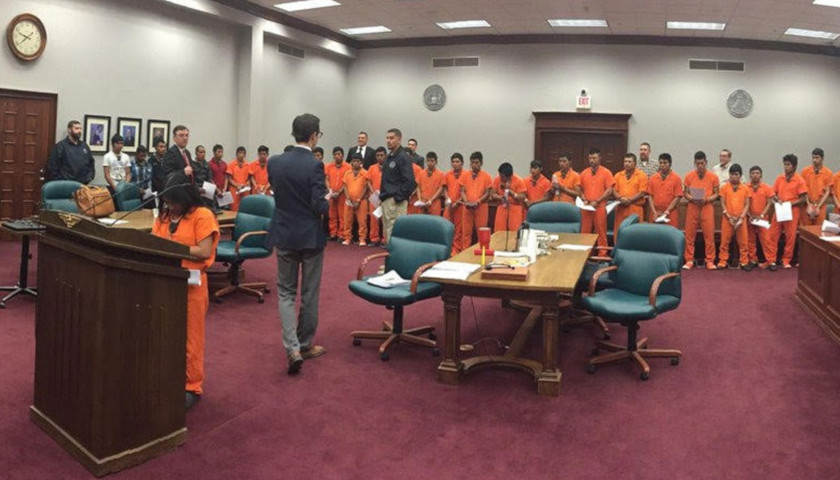
New data on immigration judge denials for #asylum FY2019. Memphis judges' denials: Miles: 100% denied (just left the bench) Ward: 98% (currently visiting from KY) Hansell: 96% Holt: 95% Averwater: 90% (retired) Kaufman: 87% (moved to CO)
Christians should advocate for President Donald J. Trump’s conviction and removal from office by the Senate. While Trump has an excellent record of appointing conservative judges and advancing a prolife agenda, his criminal conduct endangers the Constitution. The Constitution is more important than the prolife cause because without the Constitution, prolife advocacy would be meaningless.
The fact that we live in a democratic republic is what enables us to turn our prolife convictions from private opinion into public advocacy. In other systems of government, the government does not care what its citizens think or believe. Only when the government is forced to take counsel from its citizens through elections, representation, and majoritarian rule do our opinions count.
Our democratic Constitution — adopted to “secure the blessings of liberty” for all Americans — is what guarantees that our voice matters. Without it, we can talk about the evils of abortion until we are blue in the face and it will never affect abortion policy one iota. The Constitution — with its guarantees of free speech, free assembly, the right to petition the government, regular elections, and the peaceful transfer of power — is the only thing that forces the government to listen to us.
Trump’s behavior is a threat to our Constitutional order. The facts behind his impeachment show that he abused a position of public trust for private gain, the definition of corruption and abuse of power. More worryingly, he refused to comply with Congress’s power to investigate his conduct, a fundamental breach of the checks and balances that is the bedrock of our Constitutional order.
1. No standing to bring this case. 2. No injury that could be proven as a result of the change in policy, because APA students still overwhelmingly benefit from Discovery Program https://t.co/uwPu1vuPl3
In Doe v. Trump the District Court blocked the Department of Homeland Security's imposition of health insurance requirements on applicants to enter the United States. Newly appointed Ninth Circuit Judge Daniel Bress, a former clerk to Antonin Sclaia, dissented from the denial of an "administrative stay" of the District Court's order pending appeal. The preliminary injunction appealed preserves the status quo. - gwc
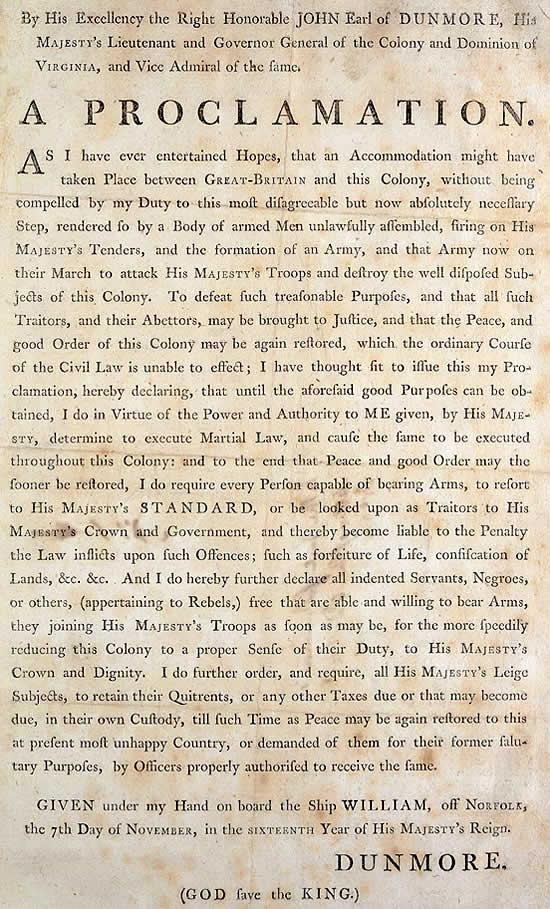
Lord Dunmore Proclamation (1775) Offering freedom to indentured Servants, Negroes, and others who abandon their masters and take up arms with His Majesty's troops
Jefferson: “I supposed the state of Virginia lost under Lord Cornwallis’s hands 30000, and that of these 27000 died of smallpox and camp fever.” (Thomas Jefferson to Alexander McCaul, 19 April 1786) This is Jefferson writing about enslaved people in the Revolution. 1/
I know it's Christmas but I can't muster good cheer at the assault on #1619Project by Sean Wilentz et al. (FWIW I took Wilentz/McPherson's seminar in 19th century U.S. history when I was in grad school and they've been singing the same tune for decades.) https://t.co/GYRDbQF3J9
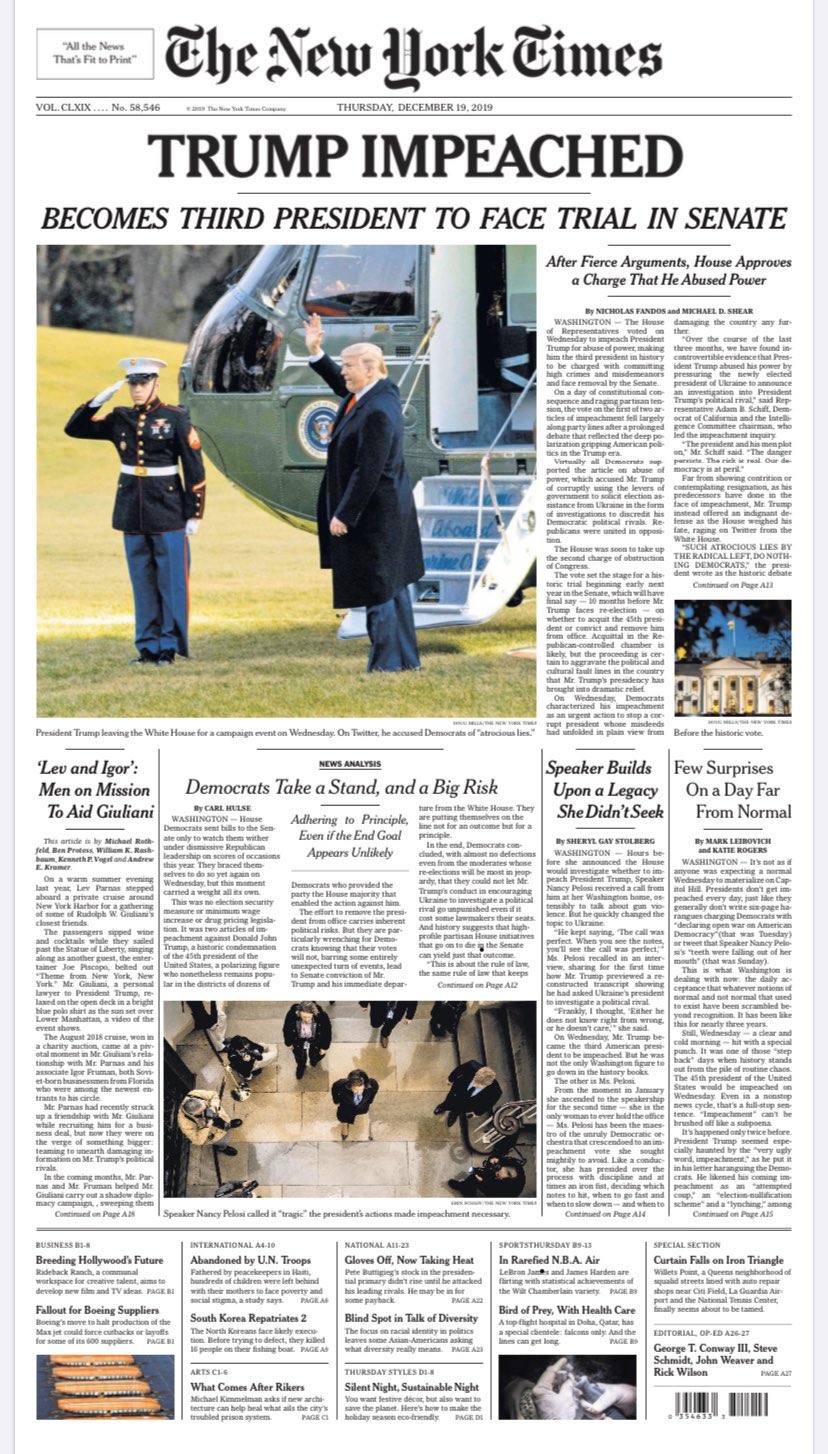
On Wednesday night, Donald Trump was impeached by the House of Representatives. Trump will now — perhaps after some delay — be put on trial in the Senate, where he will then be acquitted by Republicans who have sworn personal fealty to him.
Trump’s impeachment is one of the few moments in his life when he has ever been held accountable for his behavior. Consequences are the enemy of Donald Trump. As such, in response to the Ukraine scandal, the Mueller report, the 2018 midterm elections and various other moments when Democrats and the public defied Trump’s authoritarian goal of becoming a de facto king or emperor, he has lashed out in the form of (another) temper tantrum.
In keeping with his strategy of stochastic terrorism, Trump’s letter is an incitement to violence by his followers against the Democrats for the “crime” of impeachment.
Trump is possessed of the delusional belief that he (and by implication his supporters) is a victim of a “witch hunt” akin to the famous event in Salem, Massachusetts, in 1692. In keeping with his malignant narcissism, Trump’s letter, of course, boasts of his strength and fortitude against the Democrats and other enemies.
A Long-Lost Manuscript Contains a Searing Eyewitness Account of the Tulsa Race Massacre of 1921
An Oklahoma lawyer details the attack by hundreds of whites on the thriving black neighborhood where hundreds died 95 years ago
The manuscript, "The Tulsa Race Riot and Three of Its Victims," by B.C. Franklin was recovered from a storage area in 2015 and donated to the African American History Museum. (NMAAHC, Gift from Tulsa Friends and John W. and Karen R. Franklin)
The ten-page manuscript is typewritten, on yellowed legal paper, and folded in thirds. But the words, an eyewitness account of the May 31, 1921, racial massacre that destroyed what was known as Tulsa, Oklahoma’s “Black Wall Street,” are searing.
“I could see planes circling in mid-air. They grew in number and hummed, darted and dipped low. I could hear something like hail falling upon the top of my office building. Down East Archer, I saw the old Mid-Way hotel on fire, burning from its top, and then another and another and another building began to burn from their top,” wrote Buck Colbert Franklin (1879-1960).
The Oklahoma lawyer, father of famed African-American historian John Hope Franklin (1915-2009), was describing the attack by hundreds of whites on the thriving black neighborhood known as Greenwood in the booming oil town. “Lurid flames roared and belched and licked their forked tongues into the air. Smoke ascended the sky in thick, black volumes and amid it all, the planes—now a dozen or more in number—still hummed and darted here and there with the agility of natural birds of the air.”
Franklin writes that he left his law office, locked the door, and descended to the foot of the steps.
“The side-walks were literally covered with burning turpentine balls. I knew all too well where they came from, and I knew all too well why every burning building first caught from the top,” he continues. “I paused and waited for an opportune time to escape. ‘Where oh where is our splendid fire department with its half dozen stations?’ I asked myself. ‘Is the city in conspiracy with the mob?’”
Franklin’s harrowing manuscript now resides among the collections of the Smithsonian’s National Museum of African American History and Culture. The previously unknown document was found last year, purchased from a private seller by a group of Tulsans and donated to the museum with the support of the Franklin family.
In the manuscript, Franklin tells of his encounters with an African-American veteran, named Mr. Ross. It begins in 1917, when Franklin meets Ross while recruiting young black men to fight in World War I. It picks up in 1921 with his own eyewitness account of the Tulsa race riots, and ends ten years later with the story of how Mr. Ross’s life has been destroyed by the riots. Two original photographs of Franklin were part of the donation. One depicts him operating with his associates out of a Red Cross tent five days after the riots.
John W. Franklin, a senior program manager with the museum, is the grandson of manuscript’s author and remembers the first time he read the found document.
“I wept. I just wept. It’s so beautifully written and so powerful, and he just takes you there,” Franklin marvels. “You wonder what happened to the other people. What was the emotional impact of having your community destroyed and having to flee for your lives?”
Rep. Jamie Raskin (D-MD), a former law professor, delivered a powerful opening statement in the debate on proposed articles of impeachment of Donald Trump.
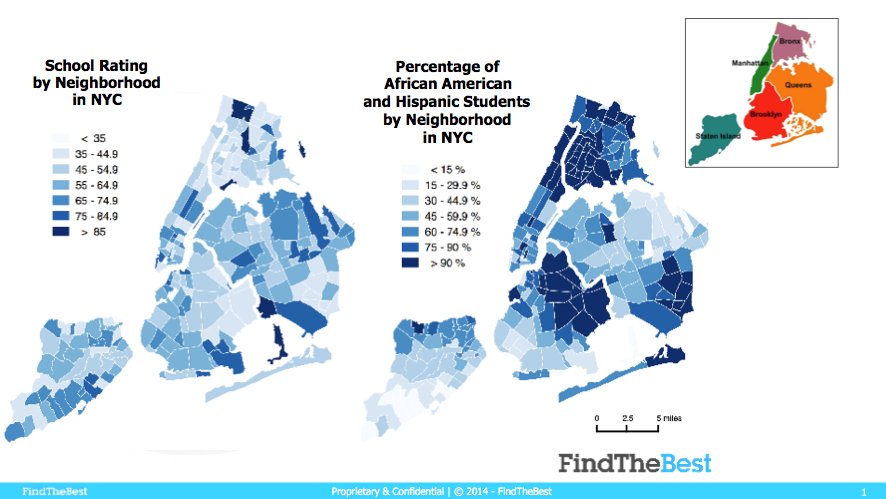
truggles over school desegregation are back. Howard County andNew York City are just the best-known places now roiled by it.
Integrating public schools is tough, even in places where the population is varied enough to make it numerically possible. And after decades of experience, we still know very little about how to make it work.
Founder - The Center on Reinventing Public Education
Research Professor - The University of Washington Bothell
Former Nonresident Senior Fellow - The Brookings Institution
Recent experience is not encouraging. A new report about diverse-by-design charter schools shows that only a minority of these schools has been able to attract the mixed population they sought. Out of 191 charter schools that were judged to have a “strong commitment” to diversity, 89 were still rated “low diversity” in enrollment.
Desegregation is difficult to achieve because children of different races live in different neighborhoods. But that’s not all: When families are able to choose schools without regard to location—for example, in the case of charter schools—the resulting schools are often more segregated than neighborhood schools.
Once achieved, desegregation can be hard to keep. Magnet and charter schools designed to be desegregated can tip over time to become dominated by students of one race/ethnicity. Efforts to create excellent schools that will attract a diverse population can end up attracting too many white and middle-class students. On the other hand, any parent will distrust and want to leave a school they fear does not prioritize their children’s needs.
The parents of a given school are like a political coalition: They are a group that agrees on a single action—enrolling in the school—but their reasons for doing so can differ. This has big implications for school desegregation. First, any parent’s enrollment decision must be seen as conditional and subject to reversal. Second, all parents might have common desires about some things (for example, hoping that great biology teacher stays around) and might leave if disappointed. Third, and most challengingly, different parents’ expectations easily come into conflict, so that promises made to one parent might drive another away.








/https://public-media.si-cdn.com/filer/c0/e2/c0e2c3f2-ca2e-4c12-80d2-5b9da3bab69e/20151761001web.jpg)