Friday, January 29, 2016

Philip Morris Casts Doubt On Lung Screening In Boston Trial - Law360

The New York Court of Appeals split 4-3, rejecting the theory on which Massachusetts Supreme Judicial Court allowed plaintiffs to go to trial

Philip Morris Casts Doubt On Lung Screening In Boston Trial - Law360


By Cara Salvatore

Law360, Boston (January 28, 2016, 9:36 PM ET) -- Facing the prospect of bankrolling a medical program for thousands of Marlboro smokers, Philip Morris told a Boston jury Thursday that lung-cancer screenings for healthy smokers can actually end up harming them if doctors pursue invasive follow-ups.

On the first full day of an expected two weeks’ worth of testimony, the 114-year-old cigarette giant tried to discredit the scan that’s at the center of the trial: low-dose computed tomography, or LDCT.

A class of tens of thousands of healthy Massachusetts Marlboro smokers wants Philip Morris to pay for $500-per-test annual LDCT screenings, they said in Wednesday's openings. And their first witnesses, a pulmonologist and a thoracic surgeon, told the jury on Thursday that LDCT can lower smokers’ lung-cancer mortality by 20 percent because it detects abnormal tissue much earlier than X-rays do.

That finding was from the National Lung Screening Trial, or NLST, whose results were published in 2011 in the New England Journal of Medicine.

But Philip Morris said some NLST patients had bad outcomes. Some whose scans showed nodules, even nodules eventually proven benign, were harmed by their follow-ups, said defense attorney Kenneth Parsigian of Latham & Watkins LLP.

Parsigian pointed out “false-positive results treated with invasive procedures” like bronchoscopy, a camera down the throat; thoracotomy, a surgery that delves inside the ribcage; or needle biopsy, which inserts a needle through the chest and into the nodule while the patient is having a CAT scan.

Of the 26,722 smokers who had an LDCT during the multi-year study, 39.1 tested positive at least once. A small number of those underwent an invasive procedure, and a smaller number of those had a major complication. At the end, 87 of the 26,722 had a major complication, including 12 who did not have lung cancer, according to the study.
“Three survived who would have died [with an X-ray instead of an LDCT scan] ... and then three out of a thousand people scanned also had a major complication as the result of a scan finding a nodule,” he said, suggesting it meant LDCTs were a wash.

Mount Sinai Hospital clinical professor of pulmonary medicine Albert Miller, whom Parsigian was cross-examining at the time, responded that those outcomes were specific to the NLST and are unlikely to be replicated often.

“We’ve had three examples of that among 15,000 screenees” in I-ELCAP, the screening program he runs, Miller said.


And Miller said the study revealed the understandable growing pains of a new technology.


“Many of these [NLST] patients had surgeries that might not have been done if there had been more consistent and state-of-the-art follow-up,” Miller said. Doctors now consult an algorithm that provides clear best practices for follow-up, which don’t involve those types of procedures for the smallest nodules to which LDCT is sensitive.


Thoracic surgeon Frederic Grannis, the second witness, told the jury that whatever the issues, LDCT allowed for vastly improved survival over X-rays.


“For most of my career, we didn’t have screening, and we would see a patient only when they had their first symptoms,” Grannis said, noting that those symptoms include coughing up blood, a headache, bone pain from a metastasis or other macro symptoms that appear when a patient is often too close to death to be saved.


Grannis’ clear passion made for highly detailed answers to the questions of plaintiffs’ attorney Steven Phillips, and as Grannis spoke about the many medical groups he’s been a member of and the frequent meetings in which thoracic surgeons and pulmonologists gather to refine the state of the art, he left a sense of the enormity of the industry that exists solely to respond to the work of Philip Morris and its few brethren.


Meanwhile, Miller said LDCT has turned around the prognosis for people with newly discovered lung cancer since it burst onto the scene in 2000.


“It’s just about black and white,” Miller told Phillips. “From a survival rate of 15 percent [under the X-ray regime] to a mortality rate of 15 percent [after a true positive with LDCT] … a remarkable reversal.”


It’s unclear exactly how many people are in the class because the court has sealed those records. But Massachusetts had 815,000 smokers as of 2012, and Marlboro had a 41 percent share of the cigarette market in the U.S. as of 2014, both according to the Centers for Disease Control and Prevention. Assuming a conservative minimum of 30,000 healthy, longtime Marlboro smokers in the state, a complete win for the Massachusetts plaintiffs would cost Philip Morris at least $15 million per year.


The plaintiffs are represented by Kevin Peters of Arrowood Peters LLP, Steven Phillips, Victoria Phillips and Aryeh Taub of Phillips & Paolicelli LLP, Christopher Weld Jr. and Edward Foye of Todd & Weld LLP, and David Strouss of Thornton & Naumes LLP.


Philip Morris is represented by Kenneth Parsigian of Latham & Watkins LLP, Diane Sullivan ofWeil Gotshal & Manges LLP and Lauren Goldman of Mayer Brown LLP.


The case is Donovan et al. v. Philip Morris USA Inc., case number 1:06-cv-12234, in the U.S. District Court for the District of Massachusetts.

Wednesday, January 27, 2016

Second bellwether trial under way for DePuy Pinnacle hip implant | Greensboro Legal Examiner | Greensboro North Carolina Personal Injury Lawyer

Second bellwether trial under way for DePuy Pinnacle hip implant | Greensboro Legal Examiner | Greensboro North Carolina Personal Injury Lawyer

by Emily Beeson

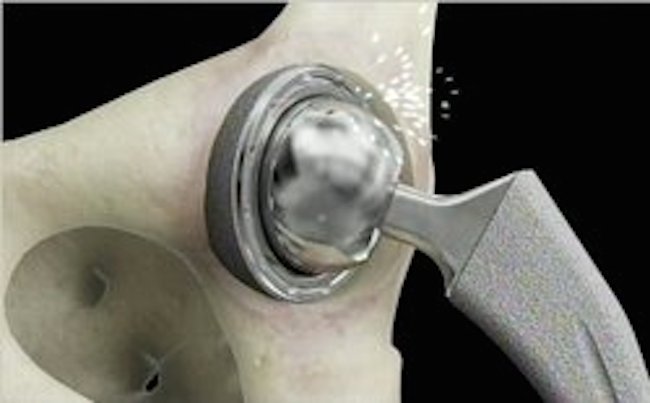
The DePuy Pinnacle hip implant is back on trial in a Texas federal court. Five plaintiffs who received the metal-on-metal hip implant are having their cases presented in one proceeding against manufacturer DePuy, a subsidiary of Johnson & Johnson.
hip debris - Hip Replacement Survivors, Facebook
Image / Hip Replacement Survivors

The trial began on January 8, 2016, when Judge Ed Kinkeade issued an order consolidating the five cases for trial. Eight witnesses have been called by the plaintiffs to date.
Thousands of people across the country anticipate the outcome of the litigation that will affect injury claims by recipients of the metal-on-metal Pinnacle hip implant. The jury hearing these five cases, and DePuy’s defenses, will be a critical voice in determining whether DePuy creates a settlement program to respond to these claims.
In 2013, DePuy began settling claims of individuals injured by its ASR metal-on-metal hip implants after a 2011 recall of the device. The attorneys at Egerton Law have represented dozens of people hurt by this dangerous device.
The similar Pinnacle metal-on-metal hip implant has never been recalled, although it is no longer on the market.
Interestingly, articles in the UK’s Daily Telegraph published on January 24th and 25th, right in the middle of this trial, point to evidence that DePuy was aware of problems with the devices dating back to 2008. In one report, the newspaper states that DePuy “has admitted ‘an error in the measuring techniques’” used to make its Pinnacle metal-on-metal hip replacement devices that could lead to higher wear of the metal alloy used to manufacture the device. Additionally, DePuy is said to have reduced quality control measures by spending less time inspecting implants beginning in 2006.
Metal-on-metal hip implants have had higher revision rates than other hip replacement devices due to high failure rates. Recipients of metal-on-metal hips are advised to regularly have their blood tested for metal ions that can be deposited in the bloodstream, and a revision surgery is recommended if metal levels are beyond a certain threshold.
There will be several more days of testimony in the Texas court before the jury is charged with reaching a verdict. Check back in with Egerton Law for updates as the trial moves forward.

Monday, January 18, 2016

Oliver Wendell Holmes and water pollution//Environment, Law, and History:

Causal relationship is always a key problem in "toxic tort"and environmental cleanup litigation. - gwc

Environment, Law, and History: Oliver Wendell Holmes and water pollution

by David Schorr


Yesterday's edition of This Day in Water History notes the anniversary of a historic interstate lawsuit over water pollution, Missouri v Illinois (1906). See my own take after the jump.

January 17, 1900: Fifteen days after Chicago opened the Sanitary and Ship Canal and reversed the course of the Chicago River to discharge sewage into the Mississippi River, Missouri sued Illinois, “…praying for an injunction against the defendants from draining into Mississippi River the sewage and drainage of said sanitary district by way of the Chicago drainage canal and the channels of Desplaines and Illinois river.”

The Bill of Complaint alleged in part:
“That if such plan is carried out it will cause such sewage matter to flow into Mississippi River past the homes and waterworks systems of the inhabitants of the complainant…
That the amount of such undefecated [huh?] sewage matter would be about 1,500 tons daily, and that it will poison the waters of the Mississippi and render them unfit for domestic use, amounting to a direct and continuing nuisance that will endanger the health and lives and irreparably injure the business interests of inhabitants of the complainant…
That the water of the canal had destroyed the value of the water of the Mississippi for drinking and domestic purposes, and had caused much sickness to persons living along the banks of said river in the State of Missouri.”
The opinion in the case was written by Supreme Court Justice, Oliver Wendell Holmes and read in part:
“The data upon which an increase in the deaths from typhoid fever in St. Louis is alleged are disputed. The elimination of other causes is denied. The experts differ as to the time and distance within which a stream would purify itself. No case of an epidemic caused by infection at so remote a source is brought forward and the cases which are produced are controverted. The plaintiff obviously must be cautious upon this point, for if this suit should succeed many others would follow, and it not improbably would find itself a defendant to a bill by one or more of the States lower down upon the Mississippi. The distance which the sewage has to travel (357 miles) is not open to debate, but the time of transit to he inferred from experiments with floats is estimated at varying from eight to eighteen and a half days, with forty-eight hours more from intake to distribution, and when corrected by observations of bacteria is greatly prolonged by the defendants. The experiments of the defendants’ experts lead them to the opinion that a typhoid bacillus could not survive the journey, while those on the other side maintain that it might live and keep its power for twenty-five days or more, and arrive at St. Louis. Upon the question at issue, whether the new discharge from Chicago hurts St. Louis, there is a categorical contradiction between the experts on the two sides.”

Commentary: In effect, Justice Holmes ruled in favor of Chicago. The experts for St. Louis had failed to prove their case.
Reference: Leighton, Marshall O. 1907. “Pollution of Illinois and Mississippi Rivers by Chicago Sewage: A Digest of the Testimony Taken in the Case of the State of Missouri v. the State of Illinois and the Sanitary District of Chicago.” U.S. Geological Survey, Water Supply and Irrigation Paper No. 194, Series L, Quality of Water, 20, Department of the Interior, Washington, D.C.: U.S. Government Printing Office.

I think Justice Holmes's decision is noteworthy in three respects:
KEEP READING

OTHERWISE: SPC reports on progress of China’s case registration and filing system[1]

OTHERWISE: SPC reports on progress of China’s case registration and filing system[1]

SPC reports on progress of China’s case registration and filing system

Supreme Peoples Court press conference

on the new registration and filing system

One of the frustrations in the Chinese legal system has been that cases filed were often ignored by the court.  Dissatisfied fishermen's challenges to the government's settlement with ConocoPhilips for the 2011 Bohai Bay oil spill fell victim to that. When a complaint is filed the court has a short time to accept or reject it.  The system was intended to screen out plainly inadequate filings - but it became a way to shirk the onerous or the controversial.

Last year the CP announced a major reform - assuring that cases filed would be "registered" and therefore decided.  It is part of the CPC's rule of law initiative to make courts more effective.  The Supreme Peoples Court reports substantial progress since the May 2015 start date of the new system. - gwc

SPC reports on progress of China’s case registration and filing system[1]

The Fourth Plenary Session of the 18th CPC Central Committee put forward a reform on acceptance of cases using the case registration and filing system as a replacement for the existing case review and filing system; it also urged that all cases should be accepted and all litigation should be processed to guarantee the rights of litigants to appeal.
According to a resolution made at the 11th meeting of the central leading group for deepening overall reform on April 1, 2015, the new case-filing system was to take effect on May 1, 2015.
I. Brief introduction of the implementation of the system
On its implementation on May 1, the channels for case registration were opened to the public and the new system has operated well in courts across China. As of Sept 30, more than 6.2 million cases of first instance have been registered, up 31.9 percent from a year earlier.
The year-on-year growth rates of civil cases, administrative cases and criminal cases of private prosecution were 22.9 percent, 75.8 percent and 60.5 percent, respectively.
Jiangsu, Zhejiang, Shandong, and Guangdong are the provinces with the most registered cases in China, including 608,000 cases in Jiangsu and 558,000 cases in Guangdong.
The SPC accepted a total of 6,852 new cases, up 58.39 percent year-on-year, during the Jan-Sept period and is expected to handle about 15,000 cases by year end.
A key reason for the sharp rise of registered cases in courts at all levels is the implementation of the system. This result shows that the reform on case-filing has won popular support and accords with people’s will, and that the courts have fulfilled their commitments of “all cases should be accepted and all litigation should be handled”. It also indicates that courts have completely solved the difficulty in case-filing, so that people feel more satisfied with the judicial reform, resulting in high praise from people of all walks of life. A lawyer from a court in Shenyang’s Huanggu district said the case registration and filing system is the most thorough and effective reform in the history of the people’s court.

Tuesday, January 12, 2016

Ethicon (Johnson & Johnson) Pelvic Mesh Verdicts to Date


by Amanda Bronstad // National Law Journal
After four years of litigation, most of the manufacturers of pelvic mesh devices have begun to settle thousands of cases in an effort to shrink the largest mass tort in the country.
All, that is, except for Johnson & Johnson.
Unlike other defendants, Johnson & Johnson's Ethicon Inc. for the most part has resisted efforts to settle litigation over the devices, taking its chances in court. And so far, the record isn't great: Ethicon has lost five of seven bellwether trials in the past two years. At least six more trials are coming up this year against Ethicon — by far more than any other pelvic mesh defendant. The first two are in Philadelphia on Jan. 25 and Feb. 22.
Lawyers involved in mesh litigation are monitoring the outcomes of those ­trials to assess whether Ethicon, which has more lawsuits than any other defendant, could be convinced to start settling its cases.
Most of the trials are in state courts. But U.S. District Judge Joseph Goodwin of the Southern District of West Virginia, who has been pressuring all the defendants to settle the federal lawsuits over pelvic mesh devices, has scheduled the first consolidated trial against Ethicon. That trial, set for April 11, involves 37 cases against the company.


Read more: http://www.nationallawjournal.com/id=1202746663449/Pelvic-Mesh-Maker-Bets-On-Trials#ixzz3x2mVERZf

Monday, January 4, 2016

Challenging Indiana's Med Mal Cap //TortsProf Blog

TortsProf Blog

In 2003, Juliann Bobbitt was born a quadriplegic and unable to speak. Her parents filed a medical malpractice action in 2005. An expert estimated her lifetime care costs between $8 and $10 million. In 2013, a jury awarded $15 million in damages to her parents. Indiana, however, has a $1.25 million med mal damages cap. To date, Medicaid has paid over $500,000 on Juliann's care, an amount that would have to be reimbursed out of the proceeds of any verdict or settlement. The parents are challenging the constitutionality of the cap. The Elkhart Truth has the story.

Sunday, January 3, 2016

Half-Baked — The Retail Promotion of Marijuana Edibles — New England Journal of Medicine

Voters have moved to legalize marijuana because it is popular and it seems to be no more problematic than alcohol.  But marijuana is a drug which should not be legalized without a regulatory structure, argue two Stanford researchers. - gwc 

OTHERWISE: Half-Baked — The Retail Promotion of Marijuana Edibles — New England Journal of Medicine

Monday, December 28, 2015

No equipment can prevent concussion

Concussion: doctor who fought NFL says 'no equipment can prevent' such injuries http://gu.com/p/4fazp?CMP=Share_AndroidApp_Blogger

Wednesday, December 23, 2015

$16 Million for Brain Research, but $0 from N.F.L. - The New York Times

$16 Million for Brain Research, but $0 from N.F.L. - The New York Times

by Ken Belson

Researchers at several universities and research institutes were awarded almost $16 million Tuesday to find a way to diagnose, while victims are alive, chronic traumaticencephalopathy, a degenerative brain disease linked to repeated head hits in contact sports.


The National Institutes of Health and the National Institute of Neurological Disorders and Stroke issued the seven-year grant as part of a long-term study of brain disease in former N.F.L. and college football players, many of whom sustained multiple concussions on the field.
Despite the implications that the research may have on football players and the N.F.L., no league money will be used to help pay for the grant.
For years, researchers have been able to diagnose C.T.E. only by examining the brains of players who died and whose families agreed to donate the organ, a limitation that has slowed efforts to determine who is susceptible to having the disease.


The new study, considered among the most ambitious in the field of sports-related brain injury, aims to develop ways to spot the disease in the living and figure out why certain players get it and others do not. A more comprehensive understanding of the disease, the researchers said, may lead to ways to prevent it.

Wednesday, December 2, 2015

Illinois Attorney General Asks For Federal Probe After Shooting Of 17-Year-Old

Illinois Attorney General Asks For Federal Probe After Shooting Of 17-Year-Old


Illinois Attorney General Lisa Madigan has asked the U.S. Department of Justice to investigate whether the Chicago Police Department's practices violate federal and constitutional law.

Madigan said Tuesday that the "shocking death" of Laquan McDonald, a black 17-year-old who was fatally shot by white police officer in 2014, raises serious questions about the use of lawful and excessive force. She says trust in the police department is "broken."
In a letter to U.S. Attorney General Loretta Lynch, Madigan noted four other high-profile cases in Chicago, including the death of 25-year-old Ronald Johnson, who was shot by police last year.

Madigan says an investigation by the U.S. Justice Department's civil rights division is "necessary and appropriate" because of its experiences looking into police department practices nationwide.

She says the handling of investigations of police misconduct by an independent panel, police board and superintendent also raises troubling questions.

Copyright 2015 The Associated Press