
Syllabus - Remedies Fall 2025
Senior Fellow, Stein Center for Law & Ethics
gconk@fordham.edu
Room 8-108
212-636-7446
Monday, Wednesday | 2:00PM-3:25PM | Room 4-04

Principles of Remedies Law - 4th Edition - West AcademicAuthors: Russell L. Weaver and Michael B. Kelly
It is the right of the supreme power to make laws; but further, it is its duty likewise...But since it is impossible, in so great a multitude, to give injunctions to every particular man, relative to each particular action, therefore the state establishes general rules for the perpetual information and direction of all persons in all points, whether of positive or negative duty.
Week 1
Monday, August 25, 2025
SLIDES magna carta to Trump II
Constraints on the sovereign?
Query
One way to look at our Constitutional history is to see it as imposing limits on the exercise of Executive authority.
In Trump v. USA (below) C.J. John Roberts writes for the majority that the former President has "absolute" immunity from prosecution for acts within the scope of his official duties.
Justices Sotomayor, Kagan, and Jackson dissent, saying the majority "makes a mockery of the principle, foundational to our Constitution and system of Government, that no man is above the law."
Who, in your view, has the better view?
Magna Carta - 1354 - reign of King Edward
FIRST, That the Great Charter, [of 1215] and the Charter of Charters andthe Forest, and all other Statutes before this Time made Statute, and used, be kept and maintained in all Points confirmed.
II It is accorded and established, That all the Lord of Lords of the Marches of Wales shall be perpetually Mrh of attending and annexed to the Crown of England, as Wales, they and their Ancestors have been all Times past, and annexed to not to the Principality of Wales, in whose Hands soever the Crown. the same Principality be, or hereafter shall come.
IIl. That no Man of what Estate or Condition None shall be that he be, shall be put out of Land or Tenement, nor condemned taken, nor imprisoned, nor disinherited, nor put to without due Process of Death, without being brought in Answer by due Process of the Law

...the said Lords Spirituall and Temporall and Commons pursuant to their respective Letters and Elections being now assembled in a full and free Representative of this Nation takeing into their most serious Consideration the best meanes for attaining the Ends aforesaid Doe in the first place (as their Auncestors in like Case have usually done) for the Vindicating and Asserting their auntient Rights and Liberties, Declare
Dispensing Power.
That the pretended Power of Suspending of Laws or the Execution of Laws by Regall Authority without Consent of Parlyament is illegall.
Late dispensing Power.
That the pretended Power of Dispensing with Laws or the Execution of Laws by Regall Authoritie as it hath beene assumed and exercised of late is illegall.
[a list of grievances follows which are the template for our `Bill of Rights']
5th Amendment - U.S. Constitution 1791
No person shall be held to answer for a capital, or otherwise infamous crime, unless on a presentment or indictment of a Grand Jury, except in cases arising in the land or naval forces, or in the Militia, when in actual service in time of War or public danger; nor shall any person be subject for the same offence to be twice put in jeopardy of life or limb; nor shall be compelled in any criminal case to be a witness against himself, nor be deprived of life, liberty, or property, without due process of law; nor shall private property be taken for public use, without just compensation.
Article III, Constitution of the United States
| Section 2 | |||
The judicial Power shall extend to all Cases, in Law and Equity, arising under this Constitution, the Laws of the United States, and Treaties made, or which shall be made, under their Authority;—to all Cases affecting Ambassadors, other public ministers and Consuls;—to all Cases of admiralty and maritime Jurisdiction;—to Controversies to which the United States shall be a Party;—to Controversies between two or more States;—between a State and Citizens of another State;—between Citizens of different States;—between Citizens of the same State claiming Lands under Grants of different States, and between a State, or the Citizens thereof, and foreign States, Citizens or Subjects. Benjamin Cardozo in The Nature of the Judicial Process : A judge “legislates only between gaps. He fills the open spaces in the law. . . [R]estrictions . . . are established by the traditions of the centuries, by the example of other judges, his predecessors, and his colleagues, by the collective judgment of the profession, and by the duty of adherence to the pervading spirit of the law.” Erwin Chemerinsky, Against Sovereign Immunity, 53 Stanford L. Rev. 1201 (2001) "sovereign immunity is an anachronistic concept, derived from long-discredited royal prerogatives, and that it is inconsistent with basic principles of the American legal system. Sovereign immunity is justified neither by history nor, more importantly, by functional considerations. Sovereign immunity is inconsistent with fundamental constitutional requirements such as the supremacy of the Constitution and due process of law. This article concludes that sovereign immunity, for government at all levels, should be eliminated by the Supreme Court." Superseding Indictment USA v. Donald John Trump - August 27, 2024
| |||
Final Report of Special Prosecutor Jack Smith on the events of January 6, 2021
Executive Branch Attacks on January 6 Prosecutors - Democratic Backsliding - Stanford Law Review - Sonia Mittal July 2025 - Volume 78
Justice Department Manual 18 U.S.C. 371 Conspiracy to Defraud the United States
Trump v. U.S.A., 590 U.S. 593 (2024)
Roberts, C.J.
As we have noted, there is little pertinent precedent on [presidential immunity rejected below] to guide our review of this case—a case that we too are deciding on an expedited basis...
Under our constitutional structure of separated
powers, the nature of Presidential power entitles a former President to
absolute immunity from criminal prosecution for actions within his conclusive
and preclusive constitutional authority. And he is entitled to at least
presumptive immunity from prosecution for all his offcial acts. There is no
immunity for unofficial acts.
No matter the context, the President's authority to act necessarily “stem[s] either from an act of Congress or from the Constitution itself.” Youngstown, 343 U. S., at 585. In the latter case, the President's authority is sometimes “conclusive and preclusive.” Id., at 638 (Jackson, J., concurring). When the President exercises such authority, he may act even when the measures he takes are “incompatible with the expressed or implied will of Congress.” Id., at 637. The exclusive constitutional authority of the President “disabl[es] the Congress from acting upon the subject.” Id., at 637–638. And the courts have “no power to control [the President's] discretion” when he acts pursuant to the powers invested exclusively in him by the Constitution. Marbury, 1 Cranch, at 166***
We conclude that under our constitutional structure of separated powers, the nature of Presidential power requires that a former President have some immunity from criminal prosecution for offcial acts during his tenure in offce. At least with respect to the President's exercise of his core constitutional powers, this immunity must be absolute. As for his remaining offcial actions, he is also entitled to immunity. At the current stage of proceedings in this case, however, we need not and do not decide whether that immunity must be absolute, or instead whether a presumptive immunity is suffcient.
Quare: Should the absence of precedent yield judicial reticence or is the majority right to lay out a broad framework to prevent harms which are yet to occur? - GWC
Justice Sotomayor, with whom Justice Kagan and Justice Jackson join, dissenting.
Today's decision to grant former Presidents criminal immunity reshapes the institution of the Presidency. It makes a mockery of the principle, foundational to our Constitution and system of Government, that no man is above the law. Relying on little more than its own misguided wisdom about the need for “bold and unhesitating action” by the President, ante, at 604, 613, the Court gives former President Trump all the immunity he asked for and more. Because our Constitution does not shield a former President from answering for criminal and treasonous acts, I dissent.
Justice Jackson, dissenting:
“[F]rom their own experience and their deep reading in history, the Founders knew that Law alone saves a society from being rent by internecine strife or ruled by mere brute power however disguised.” United States v. Mine Workers, 330 U. S. 258, 308 (1947) (Frankfurter, J., concurring in judgment). A corollary to that principle sets the terms for this case: “No man in this country is so high that he is above the law. No offcer of the law may set that law at defance with impunity. All the offcers of the government, from the highest to the lowest, are creatures of the law, and are bound to obey it.” United States v. Lee, 106 U. S. 196, 220 (1882).
John L. Lewis defending the 1946 strike
Is this explanation [below] by C.J. Roberts for the majority persusaive to you? 603 U.S. 593, 613
The hesitation to execute the duties of his offce fearlessly and fairly that might result when a President is making decisions under “a pall of potential prosecution,” McDonnell v. United States, 579 U. S. 550, 575 (2016), raises “unique risks to the effective functioning of government,” Fitzgerald, 457 U. S., at 751. A President inclined to take one course of action based on the public interest may instead opt for another, apprehensive that criminal penalties may befall him upon his departure from offce.
Can Justice Roberts' view be reconciled with that of Justice Frankfurter cited by Justice Ketanji Jackson above?
Cass Sunstein - Presidential Immunity and Democratic Disorder:
Criminal liability of a former president is precluded for "core functions" per C.J. Roberts, above. Sunstein asks:
If a President asks the Attorney General to proceed against political opponents, or asks the Secretary of Defense to use the armed services to kill journalists, what grounds the idea that the President’s authority is “conclusive and preclusive”?
The Court pointed to no text, no original understanding, no historical practice, no considerations of constitutional structure. The text is indeterminate.
In such a case what could ground the immunity the majority has afforded a President?
Is the fear of possible future prosecution an intolerable burden on a sitting President?

Week 1
Wednesday, August 27
How should Judges decide: Precedent, Equity, and the Common law; the Common Good and the public interest.
Slavery and freedom:
Justice vs. Positive Law - Arc of Justice? Magna Carta to 1868.
Slides – magna carta to emancipation in the U.S.
How and why did our founders and courts tolerate and rationalize the development and enforcement of chattel slavery, so alien to modern values, as captured by John Locke [below] , and incompatible with not only the constraints on monarchic power imposed by the Magna Carta [1215], the 1689 English Bill of Rights , but our independence Declaration (1776) and the Masachusetts Constitution
John Locke - 1689 - Second Treatise of Government
Man being born …, with a title to perfect freedom, and an uncontrouled enjoyment of all the rights and privileges of the law of nature, equally with any other man, … hath by nature a power … to preserve his property, that is, his life, liberty and estate, against the injuries and attempts of other men...
Upon these principles the law of England abhors, and will not endure the existence of, slavery within this nation…And now it is laid down, that a slave or negro, the instant he lands in England, becomes a freeman; that is, the law will protect him in the enjoyment of his person, his liberty, and his property.
We hold these truths to be self-evident, that all men are created equal, that they are endowed by their Creator with certain unalienable Rights, that among these are Life, Liberty and the pursuit of Happiness.--That to secure these rights, Governments are instituted among Men, deriving their just powers from the consent of the governed
Somerset against Stewart [Kings Bench - 1772]
Read – speech of Lord Mansfield at pages 509-510, supra
"Lord Mansfield.-The question is, if the owner had a right to detain the slave, for the sending of him over to be sold in Jamaica."
Somerset's barrister Serjeant William Davy argued
"However, it has been asserted, and is now repeated by me, this air [of England] is too pure for a slave to breathe in : I trust, I shall not quit this Court without certain conviction of the truth of that assertion"
Did Davy win that point?
Constitution of the United States of America
Fugitive Slave Clause – 1789
Supreme Court of the United States
Prigg v. Pennsylvania, 41 U.S. 539 (1842)
pages **48 to**53
Resource page – Slavery, Natural law, and positive law
Wednesday, September 3, 2025
Read PRINCIPLES - Chapter 1 - Overview - Introduction (pages 1-5) SLIDES - OVERVIEW

Read PRINCIPLES Chapter 2 - Equity and Equitable Remedies (pages 7-15) SLIDES - introduction to equity part 1 Fall 2025
Deep Background

The Law Courts and the Chancery Courts – Cornell Law Library
Owen Gallogly - Equity's Constitutional Source, 132 Yale L.J. 1213 (2024)
The Modern Administrative State Under Siege?
The Roosevelt New Deal under assault.

SLIDES - Remedies and Constraints updated 9/7/25
Background Deadly Dust - the struggle for the creation of the Occupational Safety and Health Administration
Wednesday, September 10
Discussion Questions:
The UK Parliament in 1689 established the principle of parliamentary supremacy, exiling King James II and installing William and Mary of Orange as monarchs constrained by the Bill of Rights. The U.S. was too deeply divided to agree on Congressional supremacy at the founding. did not achieve supremacy once Marbury v. Madison in 1803 declared a sort of judicial supremacy which has come to be known as the 'separation of powers" principle. Today we have a compliant Congress, and a Supreme Court majority aligned with a President given to command.
Is the notion of `balance of powers' a good replacement for parliamentary supremacy? What were [and are?] the material, formal, or textual obstacles in the U.S. to Congressional primacy? Are we now laboring under executive supremacy? What have we lost or gained by compliance with executive dominance which Mark Lemley has labeled The Imperial Supreme Court, 136 Harv. L. Rev. F. 97 (2022).
Citizens must confront the fact that the contemporary Supreme Court since West Virginia v. EPA [2022] demands that Congress make "clear statements" when anouncing rules regarding "major questions". As Leah Litman and Daniel Deacon argue:
...the new major questions doctrine allows the presence of present-day political controversy surrounding a policy to alter otherwise broad regulatory statutes outside of the formal legislative process. It supplies an additional means for minority rule in a constitutional system that already skews toward minority rule. What’s more, it invites politically infused judgments by the federal courts, further eroding democratic control of policy. And it operates as a powerful de-regulatory tool that limits or substantially nullifies congressional delegations to agencies in the circumstances where delegations are more likely to be used—and more likely to be effective—even as the Court claims it is simply doing statutory interpretation.
Is that a demand that Congress can meet? Should the West Virginia v. EPA majority have heeded Aristotle's insight about the limits of legislation? Should the Court change course? Is there statutory or constitutional support for the `major questions doctrine'?
Read:
Aristotle on the demand for clarity in legislation, RHETORIC, Book 1, Chapter 13
Long GWC blogpost re Cass Sunstein, etc. See discussion questions embedded in blogpost: Two justifications for the major questions doctrine
FAQ - Office of Information and Regulation Affairs - Office of Management and Budget
Congressional Research Service: Major Questions Doctrine’
CRS Update: May 2022 - Major Questions Doctrine
Beau Baumann: Let's Talk about that Barrett Concurrence
Resources:
Judicial Review under the Administrative Procedure Act
The Major Questions Quartet - Mila Sohoni - Harvard Law Review
The " Quartet" is these cases:
[ Alabama Association of Realtors v.DHHS, NFIB v. Department of Labor, Biden v. Missouri, West Virginia v. Environmental Protection Agency]
Kisor v. Wilkie, 139 S. Ct. 2400 (2019)[Gorsuch concurring]
Sohoni , Mila and Levin, Ronald M., Universal Remedies, Section 706, and the APA (July 19, 2020). San Diego Legal Studies Paper 20-483, Washington University in St. Louis Legal Studies Research Paper 20-07-06, Yale Journal on Regulation's Notice & Comment Blog (2020), Available at SSRN: https://ssrn.com/abstract=4104850 or http://dx.doi.org/10.2139/ssrn.4104850
Cass Sunstein - The Collapse of Law under Tyranny September 14, 2025
Monday, September 15, 2025 - Birthright Citizenship?

Should the Statue of Liberty weep if Executive Order #4160 is allowed to stand?
SLIDES - BIRTHRIGHT CITIZENSHIP
Amendment XIV
Section 1.
All persons born or naturalized in the United States, and subject to the jurisdiction thereof, are citizens of the United States and of the state wherein they reside.
National TPS Alliance v. Kristi Noem - D.C. N.D. California
8 U.S.C. §1401. Nationals and citizens of United States at birth
The following shall be nationals and citizens of the United States at birth:
(a) a person born in the United States, and subject to the jurisdiction thereof;
(a)Granting of status
Does the 14th Amendment's "all" mean some? Amicus Claremont Institute concedes that at common law "the English rule was automatic and irrevocable allegiance based solely on location of birth." But Trump executive order #14160 titled Protecting the Meaning and value of American citizenship declares
the privilege of United States citizenship does not automatically extend to persons born in the United States: (1) when that person's mother was unlawfully present in the United States and the father was not a United States citizen or lawful permanent resident at the time of said person's birth, or (2) when that person's mother's presence in the United States at the time of said person's birth was lawful but temporary (such as, but not limited to, visiting the United States under the auspices of the Visa Waiver Program or visiting on a student, work, or tourist visa) and the father was not a United States citizen or lawful permanent resident at the time of said person's birth.
The Supreme Court cert grant in CASA is on the issue of District Judges' authority to issue "universal injunctions", with the merits decision left for a future case.
The equity tradition is generally cautious, confining rulings to the particular case before the court.
The Supreme Court has decided Trump v. Casa, Inc. which challenges the power of District Courts to issue nationwide injunctions but does not reach the birthright citizenship question. Are nationwide injunctions a danger?
In Brown v. Board of Education II the Court declared
The Brown I decision shall be implemented "with all deliberate speed."
The Court held that the problems identified in Brown I required varied local solutions. Chief Justice Warren conferred much responsibility on local school authorities and the courts which originally heard school segregation cases. They were ordered to implement the principles which the Supreme Court embraced in its first Brown decision. Warren urged localities to act on the new principles promptly
Let's discuss the merits of the citizenship issue in Trump v. Casa.
The Trump DOJ argues, in line with Executive Order 14160
Among the categories of individuals born in the United States and not subject to the jurisdiction thereof, the privilege of United States citizenship does not automatically extend to persons born in the United States: (1) when that person's mother was unlawfully present in the United States and the father was not a United States citizen or lawful permanent resident at the time of said person's birth, or (2) when that person's mother's presence in the United States at the time of said person's birth was lawful but temporary (such as, but not limited to, visiting the United States under the auspices of the Visa Waiver Program or visiting on a student, work, or tourist visa) and the father was not a United States citizen or lawful permanent resident at the time of said person's birth.
Amendment XIV
Section 1.
All persons born or naturalized in the United States, and subject to the jurisdiction thereof, are citizens of the United States and of the state wherein they reside. [emph. added] No state shall make or enforce any law which shall abridge the privileges or immunities of citizens of the United States; nor shall any state deprive any person of life, liberty, or property, without due process of law; nor deny to any person within its jurisdiction the equal protection of the laws.
Trump Executive Order 14160 issued January 20, 2025 states, in part:
Among the categories of individuals born in the United States and not subject to the jurisdiction thereof, the privilege of United States citizenship does not automatically extend to persons born in the United States: (1) when that person's mother was unlawfully present in the United States and the father was not a United States citizen or lawful permanent resident at the time of said person's birth, or (2) when that person's mother's presence in the United States at the time of said person's birth was lawful but temporary (such as, but not limited to, visiting the United States under the auspices of the Visa Waiver Program or visiting on a student, work, or tourist visa) and the father was not a United States citizen or lawful permanent resident at the time of said person's birth.
the touchstone for birthright citizenship under the Fourteenth Amendment is allegiance to the United States, rather than merely being subject to its laws or some subset thereof.
In their view an unauthorized alien does not have undivided loyalty to the U.S., so their children cannot be citizens.
Led by Jim Jordan (R-OH), 18 Republican M.C.'s argued as amici:
Respondent CASA, Inc. argues in its opposition brief:
[B]irthright citizenship is at the core of our Nation’s foundational precept that all people born on our soil are created equal, regardless of their parentage. Following this Court’s infamous decision in Dred Scott v. Sandford, 60 U.S. (19 How.) 393 (1857), and the Civil War that decision helped ignite, Congress passed and the States ratified the Citizenship Clause of the Fourteenth Amendment to enshrine birthright citizenship in the Constitution, where no President could unilaterally take it away.
from the Clerk's Syllabus in Trump v. Casa [06/27/2025]
- In Trump v. Casa the Supreme Court - reviewing three decision by lower courts, wrote "The applications do not raise—and thus the Court does not address—the question whether the Executive Order [#14160] violates the 14th Amendment's Citizenship Clause or Nationality Act. Instead, the issue the Court decides is whether, under the Judiciary Act of 1789, federal courts have equitable authority to issue universal injunctions. "
Plaintiffs (respondents here)—individuals, organizations, and States— filed three separate suits to enjoin the implementation and enforcement of President Trump’s Executive Order No. 14160. See Protecting the Meaning and Value of American Citizenship, 90 Fed. Reg. 8449. The Executive Order identifies circumstances in which a person born in the United States is not “subject to the jurisdiction thereof” and is thus not recognized as an American citizen. The plaintiffs allege that the Executive Order violates the Fourteenth Amendment’s Citizenship Clause, §1, and §201 of the Nationality Act of 1940.
- Is 14th Amendment birthright Citizenship secure?
- What is at stake here?
- In Trump v. Casa the Court did not reach the 14th Amendment grant of birthright citizenship. But we can.
In Sherrilyn Ifill Facing this Court: Sherilyn Ifill [Former GC - NAACP Legal Defense Fund] wrote
“None of this means that I am conceding defeat at this point. To the contrary. Even if, as I now believe, the conservative majority would be likely to rule in the President’s favor in Trump v. Casa if the merits were before them today, does not mean that the Court will in fact, ultimately rule in his favor. There’s still time. But it does mean that we must think now about how to create the conditions that can diminish the majority’s willingness to take such a dangerous step, and we must prepare the public for what it will mean if they do.”
Wednesday, September 17, 2025
The Administrative State Under Siege?
*SLIDES - Review under the Administrative Procedure Act
W.E.B DuBois – The Freedmen’s Bureau – The Atlantic, 1901
* Judicial review under the Administrative Procedure Act
[N.B.: 5 USC 552, 553, 702-706, 802]
SLIDES - Quis custodiet custodes? Who watches the watchmen?
SLIDES Dellinger, Special Counsel v. Bessent, Sec'y of commerce
SLIDES - LOPER BRIGHT
NPC Observer - blog
Monday, September 22, 2025
Subordination of the Universities?
President and Fellows of Harvard College v. U.S. Department of Health and Human Services and AAUP, et al. v. U.S. Department of Justice - Allison D. Burroughs - U.S. D.J.
SLIDES Harvard v. DHHS, et alii
First Amended Complaint - Harvard v. U.S. Department of Helath and Human Services (60 pages)
28 USC 1331 - federal question jurisdiction:
The district courts shall have original jurisdiction of all civil actions arising under the Constitution, laws, or treaties of the United States
D. Mass Civ Action No. 25-cv-10910-ADB September 3, 2025 Memorandum and Order by Judge Burroushs, U.S.D.C. Massachusetts (84 pages)
Over a dozen DOJ Prosecutors discharged
Case Summary AAUP v. Rubio [Palestinian protesters charged]
* Vermeule & Sunstein: The Structure of the Modern State is Under Attack NY Times 2020
Review: Sunstein and Vermeule - Law & Leviathan
EXECUTIVE ORDERS and other PRESIDENTIAL ACTIONS
Executive Office of the President - Office of Management and Budget M-25-13 January 27, 2025
The American people elected Donald J. Trump to be President of the United States and gave him a mandate to increase the impact of every federal taxpayer dollar. In Fiscal Year 2024, of the nearly $10 trillion that the Federal Government spent, more than $3 trillion was Federal financial assistance, such as grants and loans. Career and political appointees in the Executive Branch have a duty to align Federal spending and action with the will of the American people as expressed through Presidential priorities. Financial assistance should be dedicated to advancing Administration priorities, focusing taxpayer dollars to advance a stronger and safer America, eliminating the financial burden of inflation for citizens, unleashing American energy and manufacturing, ending "wokeness" and the weaponization of government, promoting efficiency in government, and Making America Healthy Again. The use of Federal resources to advance Marxist equity, transgenderism, and green new deal social engineering policies is a waste of taxpayer dollars that does not improve the day-to-day lives of those we serve.
Ending wasteful DEI Programs - EXECUTIVE ORDER
Wednesday, September 24, 2025
Elected Monarchy?
The independence of bipartisan agencies like the FTC is under grave threat, as the Supreme Court has granted `certiorari before judgment' and lifted the stay on the President's removal of an FTC Commissioner.
*SLIDES APA Review,fall 2025
NRDC:* The Supreme Court Ends Chevron Deference: What Now?
*Adrian Vermeule - Loper-Bright Delegation Replaces Chevron Delegation
Loper-Bright v. Raimondo [*read Syllabus, Kagan dissent]
*Josh Chafetz – Congress in a post-Chevron world - TESTIMONY
*Chevron U.S.A., Inc. v. NRDC, 467 U.S. 837 (1984)
Congressional Research Service *Judicial review under the Administrative Procedure Act
David French: *Overturning Chevron will Rebalance the Constitutional Order
Background - Loper Bright Amicus briefs
* Amicus Brief -Natural Resources Defense Council - in support of respondents
The Judicial Review Principles in Chevron Serve Important Values..............
A. Courts Have Long Deferred to Agencies’ Reasonable Interpretations..................
B. Chevron Commands That Courts Give Effect to Congress’s Expressed Intent C. Deference Helps Restrain Judges from Resolving Interpretive Disputes Based on Their Personal Policy Preferences .......
Professor Thomas Merrill - amicus brief in support of neither party
1. The Chevron Framework Does Not Violate Article III If the Doctrine Is Limited to Circumstances of Congress’s Actual Delegation to Administrative Agencies. ............... 8
2. The Chevron Framework Does Not Violate Article I If It Is Limited to Instances Where the Agency Acts Pursuant to Its Delegated Authority. ........................................ 14
3. The Chevron Framework Does Not Violate the APA but Respects Congress’s Delegations in Agencies’ Organic Statutes
AFL-CIO - Amicus Brief
"Performing the Legislatively Assigned Task of Further Specifying the Broad Terms of a Law is Appropriate for Agencies, But Not Courts"
Senator Ted Cruz, Speaker Mike Johnson and 34 other M.C.'s in support of petitioners - Amicus Brief
"...courts, not executive agencies, “shall decide all relevant questions of law,” including “interpret[ing] … statutory provisions” and determining whether agency action is “in excess of statutory jurisdiction, authority, or limitations, or short of statutory right.” 5 U.S.C. § 706(2)(C).
Deep background:
Context - Congressional Research Service –
`Major Questions Doctrine’ [April 2022]
The Major Questions Doctrine -Congress.Gov (November 2022)
[audio]
The Major Questions Quartet – Mila Sohoni, 136 Harvard L. Rev. 262
MONDAY SEPTEMBER 29, and Monday, October 6, 2025
Zohran Mamdani on Margaret Sanger
The New Abortion Battleground-After the death of Roe v. Wade
SLIDES - NEW ABORTION BATTLEGROUND 10/6/2025 [in progress]
SLIDES - abortion rights
SLIDES - Maine family Planning v. DHHS
Family Planning of Maine v. DHHHS
Four State AGs Ask FDA Director to Ease Burden on prescribers of Abortion Drug
Attacks on shield laws - Guttmacher Institute
How Project 2025 seeks to obliterate sexual privacy rights - Guttmacher Institute
-Dobbs v. Jackson Women's Health 19-1392 [2022]
After Dobbs:
Dobbs and Democracy - Harvard Law Review - Melissa Murray and Katherien Shaw
Texas judge enjoins and fines NY doctor $100K for providing abortion pills to Texas woman - February 13, 2015
Dr. Karen Carpenter also indicted in Louisiana.
Is this what leaving it up to the states means?
Gov. Kathy Hochul says she will not allow Dr. Carpenter to be extradited. Does NY have that right?
Office of Legal Counsel – *The Comstock Act – Application to Mailing of Prescription Abortifacient Drugs
*Republican Legislators Reply to OLC, January 2023
Vermeule and Casey – *Comstock Act Bars Mailing of Mifepristone (blogpost)
Laurence Tribe: *Where Freedom Ends (blogpost)
Tentative- subject to revision/updating
Wednesday, October 8, 2025
Restitution and Unjust Enrichment
Read: Weaver, Principles - Ch.
7 Restitution
General principles, defenses,
measuring the enrichment, Special Restitutionary Remedies–Constructive trusts,
equitable liens, subrogation, and statutory liens.
Read Weaver - Principles of Remedies - Chapter 7 Restitution
Tuesday, October 14 and Wednesday, October 15, 2025 ENFORCEMENT OF EQUITABLE REMEDIES:
Civil and criminal contempt of court; jury trial, procedural requirements, collateral challenges to injunctions
Read Weaver, Principles - Chapter 3 - Contempt, pages 31 -55
Federal Judicial Center - The Contempt Power of the Federal Courts
Civil Contempt of Court - Cornell
Criminal Contempt of Court - Cornell
SLIDES - Introduction to Contempt of Court
18 U.S.C. 401 Power of Court
Rule 70 - Enforcing a judgment for a specific Act Federal Rules of Civil Procedure
In re Debs - in context - blogpost by GWC
In Re Debs, 158 U.S. 564 (1895)
Gompers v. Buck Stove & Range, 221 U.S. 418 (1911)
United Mineworkers of America v. Bagwell, 512 U.S. 821 (1994) [read syllabus]
Monday, October 20
*NPR 50 years after Letter from a Birmingham Jail
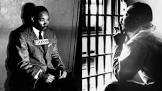
Walker v. Birmingham, 388 U.S. 307 (1967)
SLIDES - 1963
SLIDES The Collateral Bar Rule
Background/ Context:
Alabama 1963 - TV news report
Congressional Research Service - Congressional Contempt Power (2017)
https://talkingpointsmemo.com/news/supreme-court-voting-rights-act-section-2
Wednesday, October 22, 2025
Weaver, Principles of Remedies Law, Chapter 8 - Declaratory Judgments; pages 157 - 163
SLIDES - Declaratory Judgment
Uniform Declaratory Judgments Act - Conf. on Uniform State Laws
It is forbidden to parade, stand, or move in processions or assemblages in said United States Capitol Grounds, or to display therein any flag, banner, or device designed or adapted to bring into public notice any party, organization, or movement, except as hereinafter provided in sections 193j and 193k of this title.
Jeannette Rankin Brigade v. Chief of Capitol Police (D.D.C. 1972)
The Deployment of National Guard to Cities
SLIDES - Illinois and Chicago v. Trump
Vladeck: The Massive Stakes of Illinois v. Trump
NY Times - Illinois seeks to bar Trump Troop Deployment
Supreme Court Docket: Trump v. Illinois and Chicago (25-2798)
Illinois and Chicago v. Trump, 7 Cir, 2025
Illinois and Chicago v. Trump, ND Il, 2025
DOJ Application to Stay order below in Illinois v. Trump
Ninth Circuit Model Patent Jury Insturctions
Federal Circuit Bar: Model Patent Jury Insturctions
A patent for a claimed invention may not be obtained, notwithstanding that the claimed invention is not identically disclosed as set forth in section 102, if the differences between the claimed invention and the prior art are such that the claimed invention as a whole would have been obvious before the effective filing date of the claimed invention to a person having ordinary skill in the art to which the claimed invention pertains. Patentability shall not be negated by the manner in which the invention was made.
Monday, October 27, 2025
Structural
injunctions, Public School Integration – rise and fall; Reparations; the Death
of Affirmative Action]

Obama - Charleston, S.C. Amazing Grace
Slavery, Segregation, Integration and Desegregation of Public Schools
SLIDES - School Integration
National Memorial for Peace and Justice - Birmingham, Alabama
Wednesday November 4, 2025
SLIDES - Integration and apartheid - colonial era to present
The Enforcement Acts and Reconstruction Amendments
The revolutionary nature of the war between the states can be seen here. The Union Army constructs a railway system in an agricultural region dominated by rivers and sea for the transport of goods. The 13th Amendment voids the Fugitive slave clause and Acts; the 14th Amendment overrides the slave codes, establishes citizenship of the native-born [now in jeopardy] and declares the equal protection of the laws; and the 15th establishes male suffrage and voids the 3/5th clause on apportionment of Congressional representatives. Still to come in 1920 was the 19th Amendment establishing female suffrage.
42 U.S.C. 1981 - Equal rights Under the Law
42 USC 1982 - equal property rights
42 USC 1983, as amended original - 1871
Civil Rights Act of 1871 (3rd Enforcement Act) a/k/a Ku Klux Klan Act 42 USC 1985 (as now codified in part)
Civil Rights Act of 1875 - public accommodations; declared beyond Congress Power in Civil rights Cases 1883
Plessy
v. Ferguson [1896]
The white suburbs
Shelley v. Kraemer (1948)
Jonesv. Alfred Mayer Co. (1968)
Racial
segregation in the U.S. Suburbs – blogpost
Long Island Divided
- NEWSDAY
Richard Rothstein Debunking the Modern Myth of Residential Segregation
Monday November 10 and Wednesday, November 12, 2025
SLIDES - Integration of Schools - start with #85
SLIDES - Civil War to Brown
Review: The 272 - slavery and the Catholic Church in the U.S.
SLIDES - Prologue to Brown
SLIDES - Voting Rights Under Assault 11/13/2025
Lyndon Johnson - We shall overcome speech
Brown v. Board of Education II, 349 U.S. 294 (1955)
From Brown v. Topeka II (1955) through Swann v. Charlotte Mecklenberg, 402 U.S. 1 (1971), Milliken v. Bradley [Detroit] 418 U.S. 717 (1974), and Seattle (2007)
WEDNESDAY , November 19, 2025
SLIDES - Seattle, Breyer, Thomas
SLIDES - reparations
Should we be satisfied that we have overcome our history of racial segregation so that any consideration of race in governmental decision-making is improper?
The Death of Brown v. Board of Education?
John
Roberts, C.J. in Parents Involved v Seattle, 55 U.S. 701 (2007):
"We have emphasized that the harm being remedied by mandatory desegregation plans is the harm that is traceable to segregation, and that...the Constitution is not violated by racial imbalance in the schools, without more.” Milliken v. Bradley, 433 U. S. 267, 280, n. 14 (1977). See also Freeman, supra, at 495–496; Dowell, 498 U. S., at 248; Milliken v. Bradley, 418 U. S. 717, 746 (1974). Once Jefferson County achieved unitary status, it had remedied the constitutional wrong that allowed race-based assignments. Any continued use of race must be justified on some other basis."
Stephen
Breyer – dissent in Parents Involved v, Seattle
Do you agree that "the Constitution is not violated by racial imbalance, without more? What more should be shown to justify mandatory desegregation?
What is your values-based reaction to each of the following statements?
In the Seattle schools case Alex Kozinski - then on the 9th Circuit - speaking of the Seattle case proposed “robust and realistic rational basis review . . . where the courts consider the actual reasons for the plan in light of the real-world circumstances that gave rise to it."
Chief Justice
Statement of then Columbia President Lee Bollinger on affirmative action (2022)
It would be calamitous for universities and for the ideals embodied in the Constitution, if the Court were to repudiate the moral imperatives of our nation’s history and renounce the relationship between educational access and racial justice prevailing since Brown v. Board of Education changed the country more than six decades ago. Broad public awareness of the unrelenting impact of racism demands a recommitment to affirmative action, not its abandonment.
"Twenty years have passed since Grutter [v. Bollinger], with no end to race-based college admissions in sight. But the Court has permitted race-based college admissions only within the confines of narrow restrictions: such admissions programs must comply with strict scrutiny, may never use race as a stereotype or negative, and must—at some point—end. Respondents’ admissions systems fail each of these criteria and must therefore be invalidated under the Equal Protection Clause of the Fourteenth Amendment."
- Syllabus by Clerk, Supreme Court
U.S. Conference of Catholic Bishops - Option for the Poor and Vulnerable.]
See also Justice and Peace Commission - Malta
Monday, November 24, 2025
Legacy of legal racial discrimination
SLIDES Voting Rights Under Attack
Does anyone
alive today bear responsibility for the consequences of slavery and de jure racial discrimination?
The
Legacy of Slavery and legal discrimination
Acting U.S. Attorney Martin letter to Dean Treanor
Georgetown Dean William Treanor - letter to acting U.S. Attorney Martin re DEI, etc.
As a Catholic and Jesuit institution, Georgetown University was founded on the principle that serious and sustained discourse among people of different faiths, cultures, and beliefs promotes intellectual, ethical, and spiritual understanding. For us at Georgetown, this principle is a moral and educational imperative. It is a principle that defines our mission as a Catholic and Jesuit institution. Georgetown University also prohibits discrimination and harassment in its programs and activities and takes seriously its obligations to comply with all federal and local laws.
In plurimis – Letter to
Bishops of Brazil, Leo XIII, 1888 re abolition of slavery
Interview with Christopher Kellerman, S.J. re
slavery and the
Catholic Church: Kellerman It’s time to correct the historical record | America
Magazine
Monday, December 1, 2025
SLIDES - Endangered Rights - the Past 150 years
Ch. 9 Damage Remedies
MASS TORT SETTLEMENTS
SLIDES - DePuy/ASR Hip Implant Settlement
SLIDES Ground Zero worksite tort claims
RESOURCES
California Civil Instructions, 2025 Vol. II - See Series 3900 DAMAGES
Peruse New Jersey Model Civil Jury Charges - Damages
Death Damages - NY- Expert Economist Report - Frank Tinari
Mass tort remedies
Distribution of MDLs by type - U.S. Courts
MDLs – Personal injuries and product liability claims
Occupational disease and third-party asbestos product liability claims
the structured settlement grid
Schedule of disabilities - NJ Workers Compensation Act
NJ Multi-County Litigation Guidelines
8 USC 1407 Multi District Litigation
Judicial Panel on Multi-District Litigation - 2024 Report
BACKGROUND
Deadly Dust: Occupational Health and Safety as a Driving Force in Workers’ Compensation Law and the Development of Tort Doctrine and Practice , 69 Rutgers U. L. Rev. 1139 (2017) BY George W. Conk
Alvin K. Hellerstein, D.J., Aaron Twerski, and James Henderson, MANAGERIAL JUDGING: THE 9/11 RESPONDERS' TORT LITIGATION (2012)
WTC Disaster - Lung Function After 7 years - Video
Billions for mass torts - Litigation Finance - video
Judge Hellerstein - Statement re WTC Cleanup Settlement
WEDNESDAY, DECEMBER 3, 2025 - TERM PAPERS DUE
DECEMBER 17, 2025 - LAST PERMISSIBLE EXTENDED DATE FOR PAPERS

